
Solving Georgia Biomass’s EPA Title V Permit Violation with Regenerative Catalytic Oxidizers that Transformed the Industry
Executive Summary
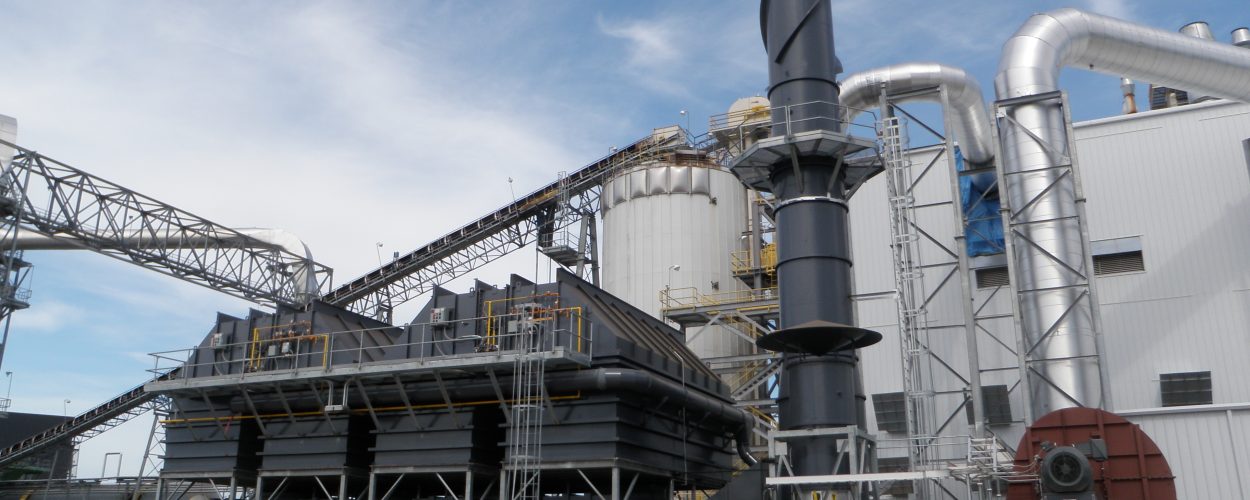
Over a decade ago, Georgia Biomass located in Waycross, GA (now owned and operated by Enviva), one of the largest wood pellet producers in North America, faced an Environmental Protection Agency (EPA) fine due to a Title V permit violation related to air emissions. To address this critical issue, Georgia Biomass turned to NESTEC, an industry leader in air pollution control solutions. NESTEC designed, developed, and installed Regenerative Catalytic Oxidizers (RCOs) to bring the facility back into compliance within a very tight timeframe requirement, while enhancing efficiency and sustainability. This project not only resolved the regulatory challenges but also improved overall operational performance, reduced emissions, optimized energy consumption, and transformed the emissions control systems solution options in the biomass industry, as a whole.
Introduction
NESTEC Inc has been at the forefront of air pollution control solutions, specializing in customized Regenerative Thermal and Catalytic Oxidizers for industrial applications. The biomass industry faces strict environmental regulations, and ensuring compliance while maintaining efficiency is an ongoing challenge. Georgia Biomass encountered an emissions-related violation under its EPA Title V operating permit, threatening continued operations and imposing great financial and reputational risks. The challenge was clear: implement a long-term, cost-effective solution within a very tight time constraint to meet regulatory standards without disrupting production!
Project background
- Scope and Goals: The objective was to reduce volatile organic compounds (VOCs) and hazardous air pollutants (HAPs) to meet EPA Title V permit limits while optimizing operational efficiency.
- Client Challenges: Georgia Biomass needed a solution that:
- Achieved compliance quickly to avoid shutting operations and additional fines.
- Improved air pollution control without excessive operational costs.
- Integrated seamlessly with existing systems.
- Why NESTEC Inc? Georgia Biomass selected NESTEC Inc due to its expertise in designing, engineering, developing, and implementing regenerative oxidation technologies, a strong track record in emissions control, and its ability to provide a customized, high-efficiency solution within a tight timeline.
Solution and Implementation
- Engineering & Design: NESTEC Inc. engineered two multi-chamber RCOs with capacities of 100,000 SCFM and 150,000 SCFM, respectively. These systems were designed to handle emissions from the facility’s two primary and secondary grinding hammer mill lines with ten hammer mills each and five pellet mill cooler lines with a total of 22 pellet mills.
- Technology & Innovation
- Advanced Catalyst Selection: The RCOs were equipped with non-precious metal, Base Metal Manganese Oxide catalyst media—an early innovation in the industry at the time. While the activation temperature for this catalyst was slightly higher (~750°F vs. ~600-800°F for precious metal types), the VOC-rich air stream ensured that the system could operate efficiently without increased fuel consumption. This highlights NESTEC’s foresight in selecting catalyst technology that balanced cost, performance, and fuel efficiency before it became common practice in the industry as a whole.
- High Thermal Efficiency:The regenerative heat recovery system enabled thermal efficiencies greater than 95%, minimizing auxiliary fuel use and optimizing operating costs.
- Ducting Modifications & Cooler Efficiency: In addition to installing the RCOs, NESTEC implemented critical ducting modifications that were carefully designed to increase airflow to the pellet coolers. This improved cooler efficiency and ultimately contributed to increased production capacity, showcasing NESTEC’s ability to deliver integrated process improvements.
Challenges Overcome:
- Space Constraints: The existing equipment layout inside the plant grounds and buildings was extremely tight, requiring precise measurement and custom fabrication to ensure proper fit without operational disruption.
- Stringent Timelines: The project adhered to a tight six-month installation schedule, with field acceptance tests completed by October 2013, well ahead of schedule, given the January deadline by the EPD to have equipment in place.
- Safety Standards: Exceptional care was taken to meet the stringent plant construction safety requirements throughout the project duration, esp. with construction work being conducted in active production areas classified as explosion risk due to high dust levels. This required NESTEC to employ the use of innovative equipment and procedures with greater safety controls.
Key Outcomes and Benefits
Verified Performance and Test Results
Upon project completion, a series of rigorous field acceptance tests were conducted on both the HM RCO (Hammermill Regenerative Catalytic Oxidizer) and PM RCO (Pellet Mill Regenerative Catalytic Oxidizer) systems, as well as on the auxiliary Pellet Cooler ID fan system. The results of these tests not only confirmed that NESTEC met all contractually guaranteed performance parameters—they significantly exceeded them in nearly every category. This underscores the robustness of the RCO design and NESTEC’s execution capabilities.
1. Airflow Capacity
– HM RCO: Contract = 100,000 DSCFM | Tested = 116,694 DSCFM
– PM RCO: Contract = 150,000 DSCFM | Tested = 181,242 DSCFM
– Pellet Cooler ID Fan: Contract = 29,000 ACFM | Tested = 30,803 ACFM
Result: Airflow guarantees passed. All flows were linearly extrapolated to design conditions using speed CVs. Official extrapolation verification by OEM is pending.
2. VOC Destruction Efficiency
– Guarantee: >95%
– HM RCO: Tested = 97.2%
– PM RCO: Tested = 95.2%
Result: Passed with margin, demonstrating highly effective catalytic conversion performance.
3. VOC Emission Guarantees
– Guarantee: <100 short tons/year (combined)
– Total Emission Rate: Tested = 50.3 st/yr
– HM RCO: 17.9 st/yr
– PM RCO: 32.4 st/yr
Result: Emission limits passed comfortably, ensuring long-term permit compliance.
4. Thermal Efficiency
– Guarantee: >95%
– HM RCO: Tested = 94.9% (mass flow corrected to 109%)
– PM RCO: Tested = 95.2% (mass flow corrected to 100%)
Result: Guarantee met with corrections; confirmed excellent heat recovery performance.
5. Gas Consumption
– Guarantee: <6 MMBtu/hr
– Tested: 1.4 MMBtu/hr
6. Electricity Consumption
– Guarantee: <1369 kWh
– Tested: 773.5 kWh
7. Availability
– Guarantee: >96%
– Tested: 99.1%
Result: All non-absolute guarantees passed, validating system efficiency and uptime performance.
- Regulatory Compliance: Achieved full compliance with EPA Title V emissions limits, effectively addressing the previous permit violations.
- Emission Reductions: The RCOs significantly reduced emissions of VOCs and HAPs, contributing to improved air quality and environmental stewardship.
- Operational Efficiency: The regenerative heat recovery design led to thermal efficiencies over 95%, resulting in substantial energy savings and reduced operational costs.
- Sustainability Gains: The project supports Georgia Biomass’s long-term sustainability goals by minimizing environmental impact and promoting cleaner production processes and efficiency.
- Client Satisfaction: Georgia Biomass expressed high satisfaction with NESTEC’s technical expertise, project management, and long-term reliability of the installed systems.
- Industry Leader: NESTEC has since become a pioneering leader in the wood biomass industry for designing and installing air emissions abatement solutions for all of the major producers.
Lessons Learned and Best Practices
- Customized engineering solutions provide better results than generic compliance fixes.
- Early regulatory intervention can prevent costly fines and production downtime.
- Advanced oxidation technologies offer both environmental and economic benefits in the biomass industry.
Conclusion
NESTEC Inc’s Regenerative Catalytic Oxidizer system successfully resolved Georgia Biomass’s EPA compliance issue while delivering long-term operational and environmental benefits. This project highlights NESTEC’s proven expertise in emissions control solutions for the biomass industry. Companies facing similar challenges can rely on NESTEC Inc to deliver customized, effective, and energy-efficient pollution control solutions.
For more information on how NESTEC can assist with air pollution control solutions in the biomass industry, visit or contact .
Location
Georgia
Industry
Biomass
Scope of Supply
Two 46,000 SCFM Regenerative Thermal Oxidizer (RTO) systems to control emissions from the potato frying portion of processing to meet local air regulations.
ADDITIONAL CASE STUDIES
Wilson, NC
Pharmaceutical Manufacturing Plant
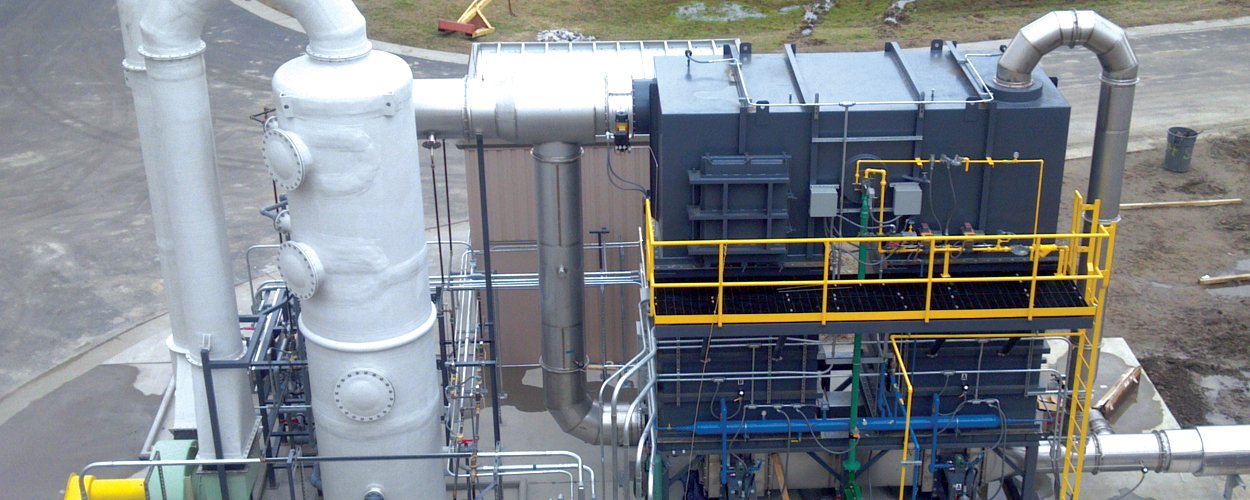
The new equipment NESTEC designed and installed for this pharmaceutical plant replaced another manufacturer’s existing catalytic oxidizer/scrubber, which was not performing adequately. In engineering the new solution, NESTEC combined two air pollution control technologies to reduce emissions most efficiently.
Chester, PA
Waste Water Treatment Plant
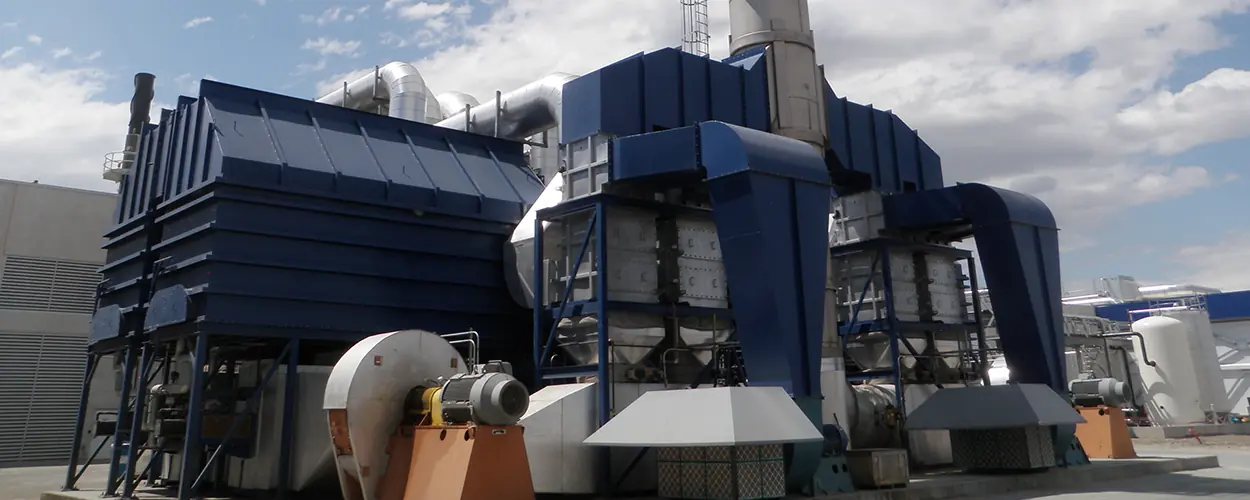
In 2015, NESTEC received an invitation to bid on two 15,000 scfm municipal waste water / sludge treatment facility thermal oxidizers to handle organic emissions from two existing Hankin ES multi-hearth furnaces. The 30+-year-old, 8 hearth furnaces were to be modified to convert the top two hearth stages of each from their original evaporation and…
Idaho
Potato Processing Facility
Nestec, Inc. provided two 46,000 SCFM Regenerative Thermal Oxidizer (RTO) systems to a potato processing facility in Idaho. The RTO’s were designed to control emissions from the potato frying portion of processing to meet local air regulations.